When a KPI changes, the most important question isn’t just “Why did it happen?” It is also “What do we need to do now?”
This step is the focus of the partnership between Mosaic and Natzka.
Mosaic brings established expertise in management consulting, Management Control, and Performance Management. Natzka complements it with an Agentic Decision Intelligence platform that connects data, scenarios, accountability, and actions.
The shared goal is to build management systems that do more than represent the company. They help management govern it.
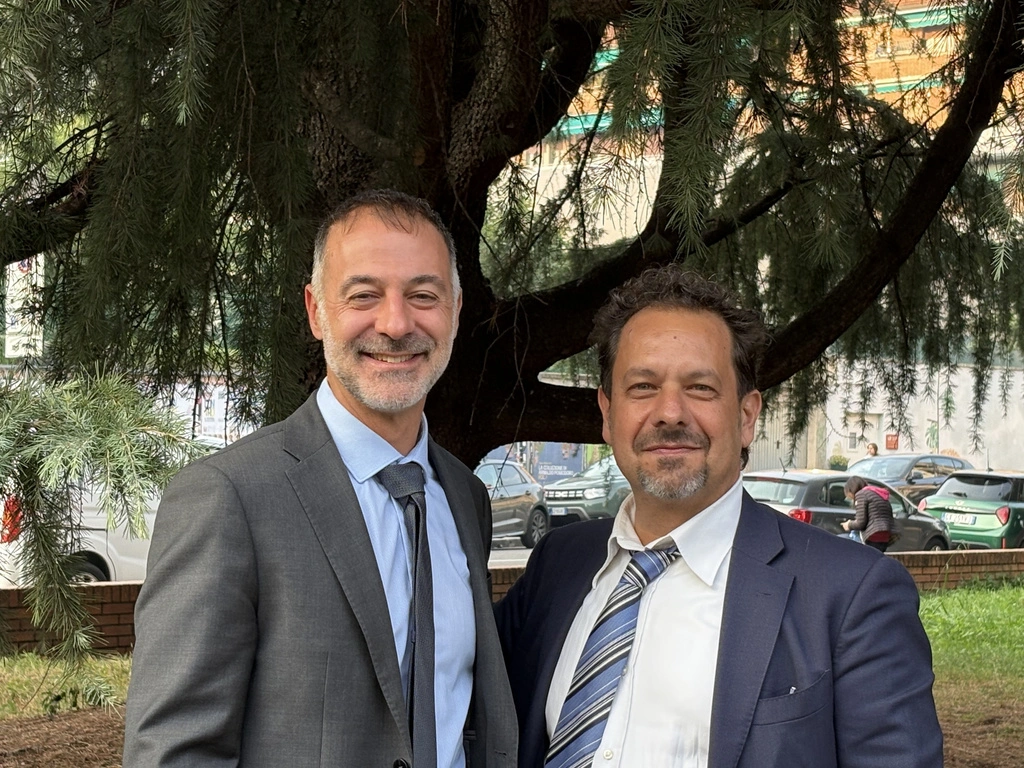
Paolo Parmigiani, Managing Director of Mosaic, and Michele Solazzo, Territory Manager Italy at Natzka, compare their perspectives.
Let’s start with Management Control. What is it asked to do today?
Paolo Parmigiani: It can no longer be limited to explaining actual results after the fact. It has to help the company understand the drivers of performance, anticipate variances, and guide future choices.
To do that, it must connect strategy, objectives, operating processes, and accountability in a single shared model.
How do you build that in practice?
Paolo Parmigiani: The starting point is always the company. No standard model works for every organisation. You have to understand the business, the organisational structure, the processes, and management’s needs.
Technology is essential, but solid methodologies and a Change Management path must accompany it. People need to understand the model, recognise themselves in the numbers, and use them in their own decisions.
Yet Finance and Operations often still work from different views.
Paolo Parmigiani: That is one of the main limitations to overcome. Financial performance results from operating decisions: volumes, prices, production capacity, inventory, purchasing, and resource use.
Budgeting, forecasting, Sales and Operations Planning, and cost control cannot remain separate processes. They need to talk to each other so management can weigh the financial and operational consequences of different alternatives together.
Why isn’t a good management model enough on its own?
Michele Solazzo: Because understanding what is happening does not mean you have decided how to act.
A management model clarifies what to measure, which objectives to pursue, and what relationships exist among the company’s different levers. But when a variance appears, or a scenario changes, some decisive questions remain. Which alternatives should we evaluate? Who needs to step in? What approvals are required? What action should be taken?
Decision Intelligence structures this step. Natzka connects data, rules, accountability, and workflows so the analysis doesn’t end in a discussion or a report. It triggers a clear, traceable, executable decision process.
The concrete value is reducing the time and uncertainty between understanding a problem and the organisation’s ability to act.
In this process, does artificial intelligence speed up decisions, or does it risk adding more complexity?
Paolo Parmigiani: It depends on how it is introduced. AI can detect anomalies, improve forecasts, accelerate scenario building, and reduce manual work.
The real leap happens when it is not added as a separate tool, but becomes a simple, intuitive access point to an already structured management model.
In that sense, Natzka AI is an important enabler. It lets management query data and scenarios, understand the causes of a variance, and trigger the right decision process, while preserving rules, accountability, and governance.
AI does not replace the management model. It makes it more accessible and operational. Without reliable data, consistent processes, and clear objectives, it risks producing more information, but not necessarily better decisions.
Why a partnership?
Michele Solazzo: Decision Intelligence creates value when it starts from a deep understanding of the company: its business model, processes, indicators, and the decisions management has to make.
Mosaic brings this knowledge and the ability to translate it into management models built around the client’s real needs. For Natzka, this complementarity is fundamental. It lets us place the platform within a solid managerial path rather than introducing it as an isolated technology tool.
Together, we can connect the model’s design to its day-to-day application, creating continuity among performance, decisions, and execution.
Paolo Parmigiani: We were looking for a partner that would not simply supply a tool, but share our way of approaching projects: starting from the business model, the processes, and the needs of management to build solutions that can actually be used.
At Natzka, we found an innovative, flexible platform and a team that can get into the substance of the problems and quickly translate business needs into concrete applications.
The collaboration is already operational with Special Flanges. Why is this project significant?
Paolo Parmigiani: Because it lets us immediately test the joint approach on real business needs that are very different from one another.
The first area covers Sales, Inventory, and Operations, processes in which commercial data, product availability, and operating decisions must be connected.
The second covers the consolidated financial statements, where reliable information, coordination, and process control are equally important.
Michele Solazzo: Special Flanges makes the complementarity between the two companies very clear.
Mosaic understands the business model, processes, indicators, and management needs. Natzka turns this context into a decision system that links variances, scenarios, accountability, and actions.
That is the value of the partnership: combining a management model built around the company with a platform that makes it operational in daily decisions.